Insight
Why DNS Is Often the Missing Layer in Incident Reviews
Teams investigating a network incident usually jump straight to routing, firewalls, and service health. DNS often gets checked too late, even though it is where many partial failures begin.
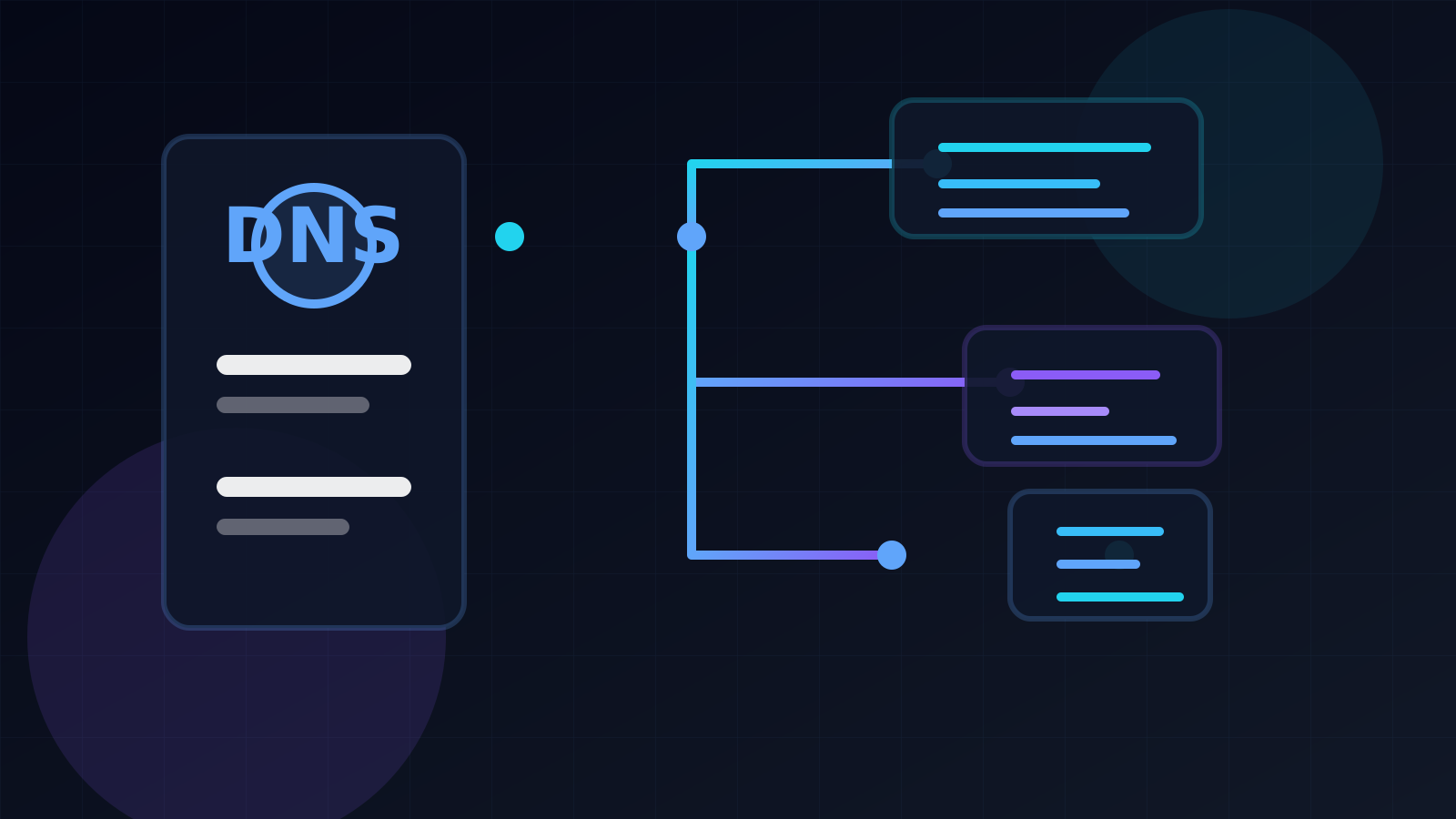
When an outage starts, most teams reach for the same set of questions first:
- Is the service up?
- Is the route correct?
- Did a firewall rule change?
- Is the load balancer healthy?
Those are sensible questions, but they often miss the layer that makes the rest of the incident look confusing.
That layer is DNS.
DNS failures are often partial, not total
The reason DNS gets overlooked is that it rarely fails in a dramatic, obvious way.
Instead, it fails partially:
- one resolver path is stale
- one record was updated but not another
- one zone is delegated correctly and another is not
- private and public resolution disagree
- cached clients behave differently from fresh clients
That kind of failure produces symptoms that look like network inconsistency even when the underlying issue is naming or resolution.
Why this creates bad incident narratives
If the review starts too low in the stack, the team can spend a long time proving that connectivity exists while users continue seeing failure.
That happens because:
- the packet path may be healthy
- the application may be healthy
- the target IP may even be healthy
but the client is still asking for the wrong destination, or asking the wrong resolver, or receiving an answer that should no longer be trusted.
The result is an incident narrative that sounds like:
“Everything looked fine, but users still could not connect.”
Usually that means one of the layers was never measured directly.
DNS should be part of the first pass
A stronger incident review treats DNS as part of the initial triage, not a fallback hypothesis.
That means checking:
- what name the client is resolving
- which resolver answered
- what TTL and cached values are in play
- whether private and public DNS paths differ
- whether failover or traffic steering records changed recently
Those checks are often faster than deep packet analysis, and they can collapse a confusing incident into a much smaller root-cause space.
The operational lesson
Teams do not need more dramatic incident reviews.
They need more complete ones.
When DNS is treated as a first-class operational layer, incident reviews become more honest about how modern systems actually fail. That usually leads to faster triage, cleaner remediation, and fewer false conclusions about the network itself.